Community & Connection
How CultureCon Built the Blueprint for Creative Community
Clavonna Smith · October 27, 2026
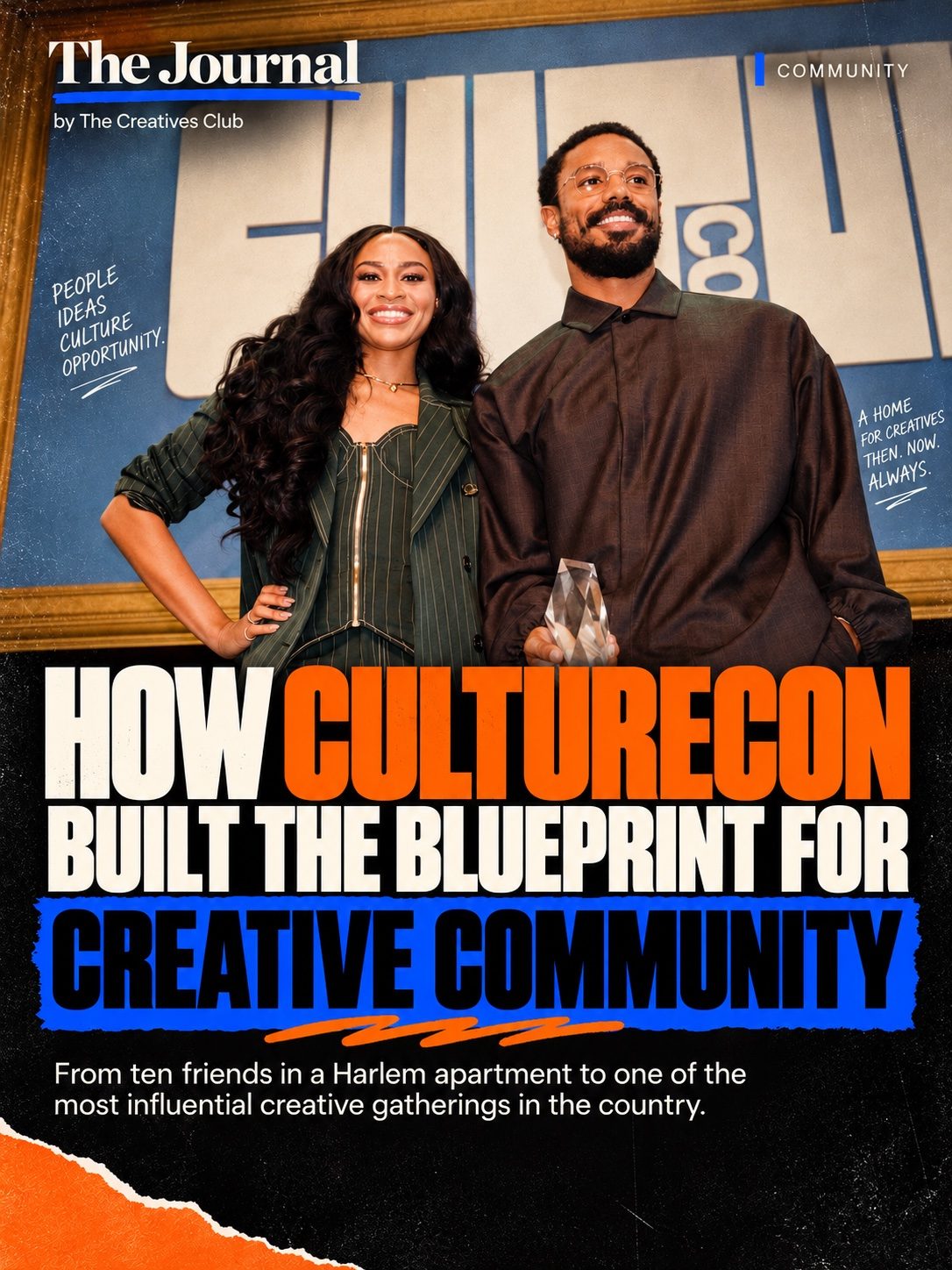
What started as ten friends in a Harlem apartment became one of the biggest gatherings for creatives of color in the country, and it's a case study in what happens when you build the room you wish existed.
How CultureCon Built the Blueprint for Creative Community
In 2016, Imani Ellis invited ten friends into her Harlem apartment because she was tired of not having anywhere to go. Not a networking event. Not a panel with a Q&A tacked on at the end. Just a room where creatives could actually talk to each other.
That room became The Creative Collective NYC. And what grew out of it CultureCon became something a lot bigger than anyone in that apartment probably imagined.
From a Living Room to a Homecoming
CultureCon officially launched in 2017, and the growth curve since then is the part worth sitting with. By 2019, it had grown to roughly 2,000 attendees. By 2022, it had moved into Brooklyn's Duggal Greenhouse and pulled around 3,500 people across 25 panels. By 2025, organizers were calling it a record-breaking year, built around the theme "Take Space: The New Frontier."
Somewhere along the way, it stopped being just a New York thing. CultureCon now runs as a multi-city tour New York, Atlanta, Los Angeles and has hosted names like Tracee Ellis Ross, Issa Rae, Spike Lee, Regina King, Lena Waithe, John Legend, Taraji P. Henson, Stacey Abrams, and Cynthia Erivo. Michelle Obama has made an appearance. Janelle Monáe has DJ'd. That's not incidental it's a signal of how much cultural weight this "gathering of friends" ended up carrying.
But the numbers aren't really the story. The story is why it grew.
It Gave Creatives Something Most Industries Don't: A Room Built for Them
Ellis has been consistent about the mission from day one building "brave spaces" for Black and brown creatives to connect beyond the business card. That distinction matters. A lot of industry events are built around access who you can get in front of, what deal might come out of it. CultureCon was built around belonging first. The masterclasses on entrepreneurship, branding, and mindfulness matter, but attendees keep describing the event the same way: a homecoming.
Ellis put it simply after one CultureCon: "I did see this in my head."
That's the part creatives should actually pay attention to not the celebrity lineup, but the fact that an idea with no budget, no venue, and no institutional backing turned into one of the most-watched creative gatherings in the country because it filled a gap that was actually there. Nobody handed Ellis a platform. She built the room, and the room got proof of concept from the people who showed up.
What It Signals for Creative Communities Everywhere
CultureCon didn't just create an event it proved a model. Creative communities don't need permission from an institution to exist. They need a founder willing to start small, a clear reason for the room to exist, and enough consistency that people keep coming back.
That's a lesson worth sitting with no matter what city you're building in or how big your first gathering is. CultureCon started with ten people in an apartment. The platform came after the community did not the other way around.