Culture & Inspiration
Nobody "Falls Off" Overnight — Here's What Actually Happens
Clavonna Smith · October 12, 2026
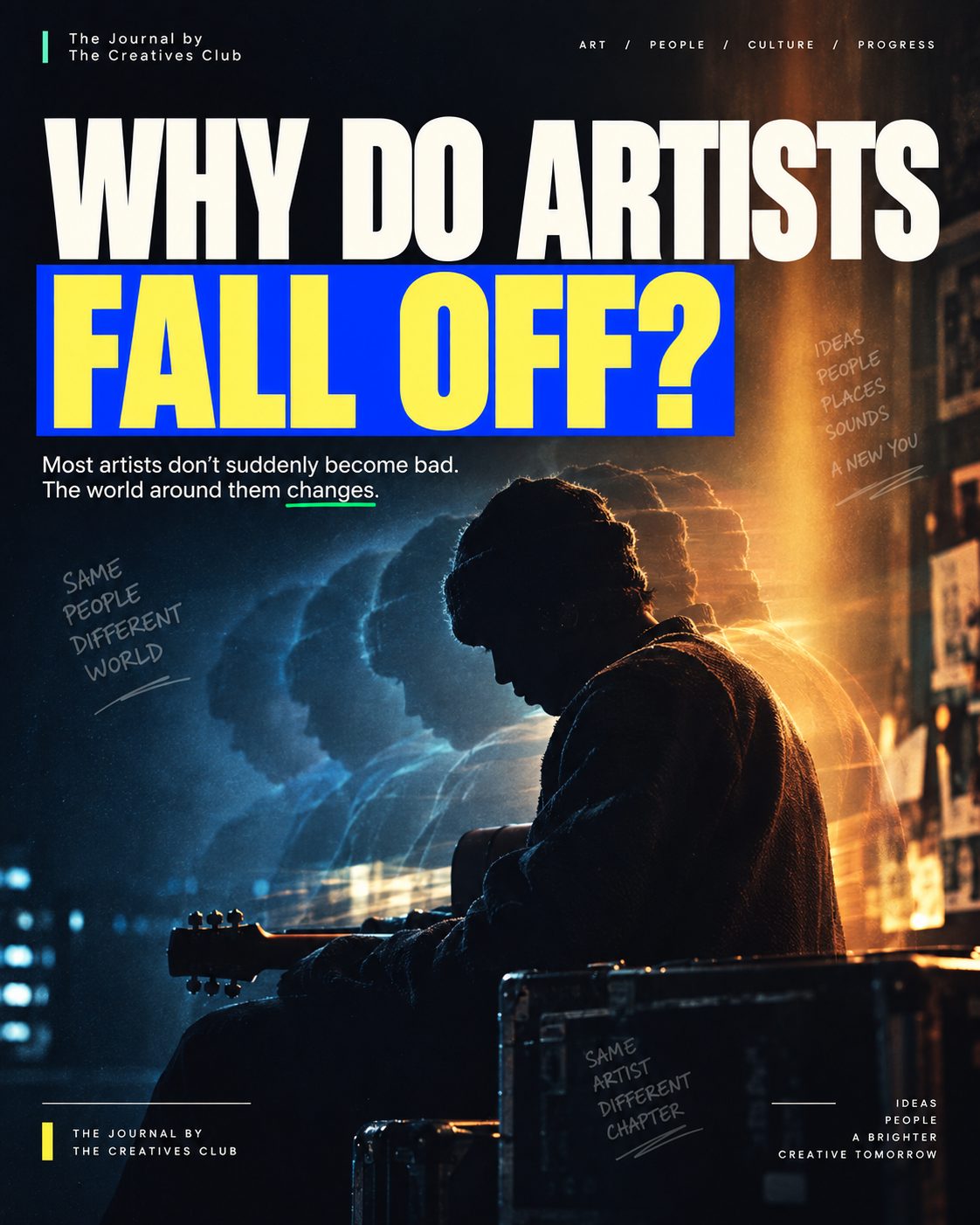
"Falling off" isn't a moment — it's a pattern. Here's what actually separates artists who fade from the ones who evolve, and why it matters for every creative building a career, not just musicians.
Nobody "Falls Off" Overnight — Here's What Actually Happens
There's a question that comes up in every genre, every era, about every artist who was once inescapable and is now... not: what happened?
The instinct is to look for a single moment — a bad album, a scandal, a diss track that landed wrong. But that's rarely the real story. Falling off isn't an event. It's a slow erosion, and it usually starts with the exact thing that made an artist great in the first place: the willingness to take a risk.
The Comfort Trap
Every artist eventually finds something that works. A sound, a formula, a lane. And once it works — once it really works — the incentive to leave it gets smaller and smaller. Why mess with the version of yourself that's already selling out venues?
The problem is that the industry doesn't hold still while you get comfortable. What sounded fresh a few years ago can quietly start to feel expected. Not bad — just familiar in a way that no longer surprises anyone. And an audience that once showed up for the unexpected starts showing up out of habit instead of hunger.
This isn't a talent problem. It's a risk problem. The same instinct that used to push an artist toward something new gets replaced by the instinct to protect what's already working.
Success Removes the Hunger That Built It
Here's the part that doesn't get talked about enough: struggle is often what makes early work so good. When you've got something to prove, every move feels urgent. Once that urgency is gone — because the wins are already banked — the work can start to feel safer without anyone intending it to.
That's not a character flaw. It's just what comfort does. The fix isn't manufacturing fake struggle — it's staying curious and connected enough that the work keeps demanding something from you.
The Audience Doesn't Stay Still Either
There's another layer to this that's easy to miss: it's not just about the artist changing. It's about who's listening.
The people who discovered an artist early grow up, and their attention shifts with their lives. Meanwhile, a whole new generation is forming its own taste — and if an artist never shows up in that generation's world, they simply don't get discovered by it. Not because the work isn't good. Because the connection to what's currently culturally alive never got made.
Culture doesn't wait for anyone to catch up. Trends shift, new artists reframe what's considered current, and an audience that isn't being actively renewed eventually just... ages out.
What Actually Separates the Artists Who Last
The throughline across almost every long-running career — in music, and honestly in any creative field — isn't that the person never changed. It's that they never stopped being willing to.
Longevity isn't about staying exactly who you were when people first fell for you. It's about staying recognizable enough that people still know it's you, while never treating your current sound, style, or approach as the finish line.
Why This Isn't Just a Music Lesson
This pattern doesn't only apply to artists with a mic. It applies to photographers who stop shooting anything outside their signature style. Stylists who stop watching what's coming next because their current aesthetic is already booked out. Brands that found "their thing" and stopped asking if their thing still resonates.
The comfort trap is universal. The creatives who build careers that actually last aren't the ones who avoid it — they're the ones who notice when they've drifted into it, and choose to get uncomfortable again on purpose.