Culture & Inspiration
What DDG's Hit-A-Thon Says About Where Music Could Be Headed
Clavonna Smith · September 20, 2026
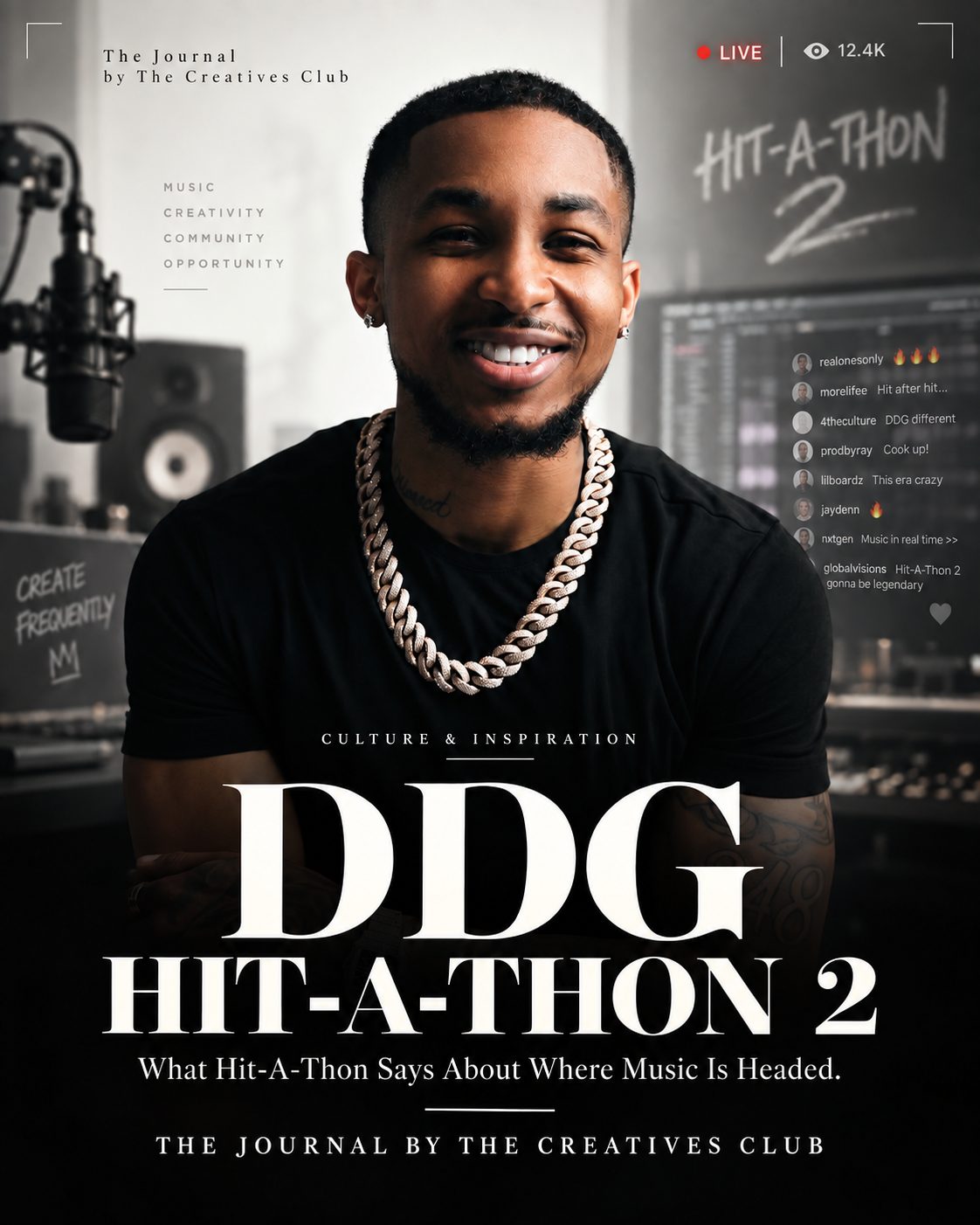
DDG isn't just livestreaming an album. He's testing a new model for how music gets made and marketed, one built on visibility instead of mystery. Here's why that shift matters.
What DDG's Hit-A-Thon Says About Where Music Could Be Headed
For most of music history, the process has been the industry's best-kept secret. You got the single, the album, the rollout never the room where any of it actually happened. Hit-A-Thon, DDG's 24/7 livestreamed album-making event, breaks that model on purpose. And whether or not that was the intent, it's functioning as a live experiment in what the music industry could look like if transparency became the product instead of the marketing strategy.
The Real Innovation Isn't the Stream — It's What It's Streaming
Plenty of artists have live-streamed studio sessions before. What makes Hit-A-Thon different is what it chooses to show. This isn't curated behind-the-scenes content dropped after the fact to build hype for a single. It's the entire process, unedited, as it happens finding a beat, picking a topic, writing to it, recording it, deciding whether it's good enough to keep. The parts of music-making that have always been treated as private are now the whole show.
And it's not just the technical process. It's the human one. Artists showing up to cook, talk, sit in silence, change direction mid-idea the stuff that never survives a traditional press cycle because there's no incentive to include it. Hit-A-Thon inverts that. The candid, unscripted interaction is the content, not a bonus layer around it.
That distinction matters, because it changes what the audience is actually buying into. They're not just fans of the final song anymore they've watched it get built, which creates a different, stickier kind of investment in the outcome.
The Range of Rooms This Has Created
Part of what makes the model work is the sheer variety of interactions it's produced. Over the course of the week, DDG's studio has seen Lil Yachty, Kai Cenat, 42 Dugg, Real Boston Richey, BenDaDonnn, Domani, T.I., OMB Peezy, Seddy Hendrix, Zaytoven, Bunna B, Karrah Boo, DreamDoll, Gio, Ian, and Pluto all come through some to record, some just to sit in and talk.
That range is the point. A traditional album rollout gives you one artist's controlled narrative. Hit-A-Thon gives you a rotating cast of perspectives, mentorship moments, and unscripted chemistry all captured live, none of it possible to fully script or predict in advance.
Two moments from the week show exactly why that's a different kind of content than the industry is used to producing.
When T.I. stopped by, the conversation went well beyond music. He revealed he was paid only around $50,000 to star in ATL the same film DDG had recreated a scene from in his own Hit-A-Thon 2 trailer, and that he'd turned down millions in music opportunities at the time to take the role. He also gave DDG a blunt read on how streaming platforms have reshaped the industry, arguing the lowered barrier to entry has left the space oversaturated. None of that was scripted, none of it was built to promote a single song — it was simply two artists talking, and the stream caught it.
Then there was Zaytoven's session bold textless a typical studio pull-up, more real-time mentorship. When DDG said he wanted to make high-energy "club" records, Zaytoven stopped him and told him plainly that the traditional club-song era doesn't really exist anymore, and that chasing it would work against DDG's actual strengths. He redirected him instead toward what he called DDG's real lane — smooth, effortless "player flavor" over forced intensity: "I don't want to see you sweating... in the club like you too turned up. I don't see that... it'll take away from your artistry."
Neither of those moments would have survived a traditional studio session and press cycle. There's no incentive for a label to leave a producer's blunt creative correction, or an older artist's off-the-cuff industry critique, in a finished rollout. On Hit-A-Thon, that unpredictability isn't cut it's the whole appeal.
A Model Built on Access, Not Mystery
For most of the streaming era, the music industry's relationship with digital platforms has been transactional: drop the song, hope the algorithm favors it, chase playlist placement. Hit-A-Thon proposes something structurally different it treats the making of the album as the content people want to consume, not just the finished product.
That's a real shift in what streaming can mean for an artist's career. Instead of streaming numbers being something that happens after release, the process itself becomes a revenue and engagement driver before a single song is even finished. Consistently pulling over 50,000 concurrent viewers throughout the week isn't a side effect of the format it's evidence the format works.
The Audience Isn't Watching. They're Participating.
The other piece that separates this from a passive livestream is that the audience actually shapes outcomes voting on beats, weighing in on song sequencing, helping determine which tracks make the final album. That's a meaningfully different relationship between artist and listener than the traditional model, where the audience's only input happens after release, in the form of streams and sales.
If this approach holds up and gets replicated, it points toward a version of the industry where fans aren't just consumers of a finished product — they're present for, and invested in, the decisions that shape it. That's a harder thing to walk away from once you've experienced it. You don't just like the album. You watched it get made, and maybe even helped decide what stayed on it.
Why This Matters for Every Creative, Not Just Musicians
The bigger idea here isn't really about music at all — it's about what happens when a creative removes the curtain between process and audience entirely. Most creative fields are built around hiding the mess: the failed drafts, the redirected ideas, the moments someone else's feedback completely changed the direction of the work. Hit-A-Thon bets that the mess — and the people who wander through it, like T.I. and Zaytoven — is actually more compelling than the polish.
That's worth sitting with no matter what you make. The instinct to only show finished, perfect work is deeply ingrained in most creative industries — but the format DDG is testing suggests audiences may be hungrier for the real process, and the real people in the room, than the industry has given them credit for.
Whether Hit-A-Thon becomes a repeatable industry model or stays a singular format tied to DDG's own persona is still an open question. But the fact that it's pulling these numbers consistently, over a full week, with that many different artists cycling through, is itself the proof of concept worth paying attention to.